
I’ve never understood people who complain about watching a 3-plus-hour movie yet are willing to spend an entire Saturday binging a season of a mediocre television show. I’ll take The Snyder Cut over four episodes of Stranger Things any day.
But even I was forlorn after sitting through Martin Scorsese’s The Irishman a few years back. Sure, it was long, but that wasn’t it. The issue is that it was also self-indulgent, rambling, and painstaking. Sometimes we don’t need every detail of a story, which is what tends to happen when a movie surpasses the 3-hour mark. Suffice to say, I wasn’t excited about sitting through another one of Marty’s pseudo-epics with his follow-up, Killers of the Flower Moon. The topic seemed intriguing but so did that of its mob-themed predecessor.
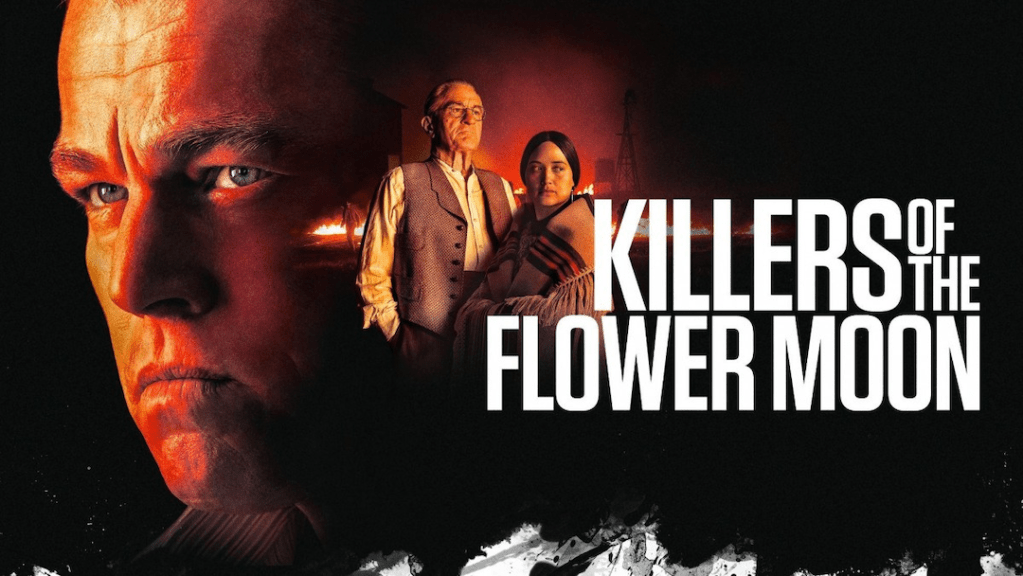
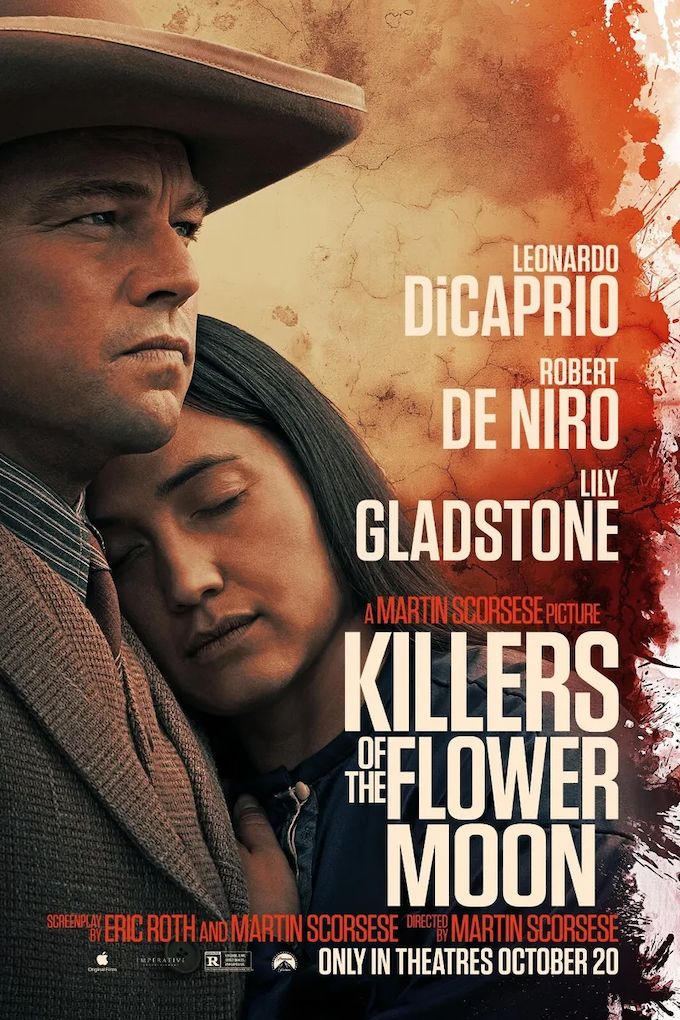
Fortunately, this tale about a Native American tribe — which was the most wealthy community per capita in the world for a time in the early 20th century — is a well that’s yet to be tapped. Leonard DiCaprio plays Ernest Burkhart, the husband of an Osage woman, Mollie (Lily Gladstone), who’s acquired tons of wealth due to her tribe discovering oil on their land some time back. Unlike other White men around there at the time, Ernest marries for love. But his simple mind and weak will allow his powerful uncle, William Hale (Robert De Niro), to manipulate him into being complicit in the eventual death of Mollie’s entire family so that her entire inheritance lands on him if she so happens to die.
The only hitch in the plan is Mollie herself, who Ernest won’t knowingly let anything happen to. So Hale and some others trick Ernest into poisoning her so that she eventually withers away as well.
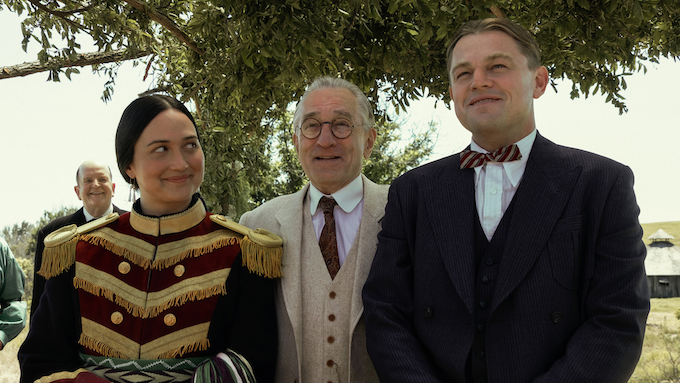
We’re left to study Ernest and try to understand where he lies in the matter. He’s a man of little self-awareness and brains, and DiCaprio, although he has his flaws as a performer, plays the putz really well — this is no Jordan Belfort. We don’t see his fall from grace, for better or worse, which makes his indecisions feel more flippant while also providing a unique perspective for the audience. True, Ernest lacks a distinct arc, but that shallowness is used to express a level of poignancy and meaning by the time the 3rd act rolls around. Although waiting for it may make you weary.
As a protagonist, Ernest is in an interesting position. He connects the villain (Hale) with the hero (Mollie) while floating somewhere in the middle. His actions are more sympathetic, justified only by his stupidity and spinelessness. It’s all wrapped up in a climactic scene that shows why Scorsese is a master of small decisions over large strokes.
Initially, Ernest is treated like a pawn used to serve this story, but when his heart is revealed to us later on, we realize we’ve been learning about him the entire time. He doesn’t lack depth, but really he just lacks motivation. He’s not a pawn to the story but a pawn to the villain.

Deceptively sprawling like all of the director’s films, Killers of the Flower Moon casts a large net into a small pond. Throughout the tribe, Osage people are being murdered, with no investigation being held to find out why. And still, Scorsese makes sure we’re here to learn about Ernest and Mollie first and foremost.
I don’t typically love true stories. Factually driven subject matters are used like a crutch to wield social commentary and stir emotions. But here, Scorsese focuses on the identity of Ernest and the complexities of his marriage to Mollie. Compare this to The Irishman, which plays out as a saga, accumulating themes along the way while working its way to an inevitable conclusion. In Killers of the Flower Moon, the conclusion is a mystery for those who don’t yet know the story, and a bittersweet payoff for those who’ve sat through well over 3 hours of narrative.


 The Twizard
Leave a comment