

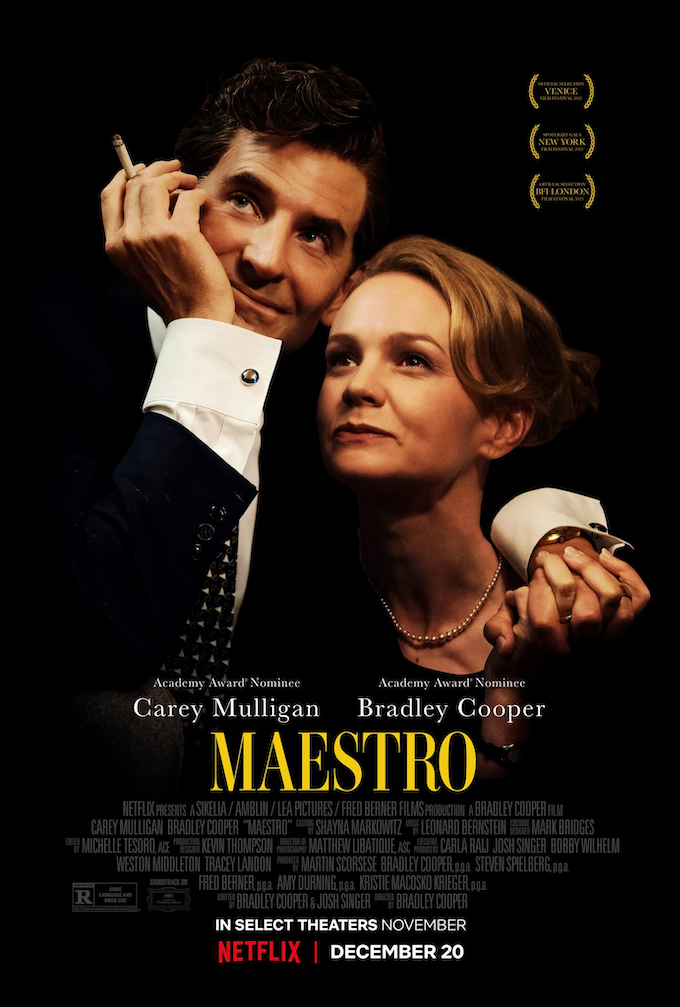
In his grand quest to become the next Warren Beatty, Bradley Cooper is one of those actor-turned-directors who’s an actual student of film. He lives it and, most of all, he understands it. His latest feature, Maestro, isn’t perfect but it does showcase his ability to execute a project with an astute vision, whether right or wrong, and collaborate with others to make something that doesn’t just feel like a vanity project.
Maestro tells the story of the great composer and conductor Leonard Bernstein, played by Cooper himself, and his marriage to his wife, Felicia (Carey Mulligan), despite the fact that he was also attracted to men. Yet rather than focusing on how this secret was kept from the public and how society reacted to it once it was well known, the film opts to show how Bernstein’s homosexuality directly impacted his relationship with his wife, who he loved dearly. More than anything, it’s about the burden and attrition that comes with acceptance, and the fine line between enabling and compassion.
Maestro follows up Cooper’s 2018 debut A Star Is Born and is remarkably different in both tone and approach. Where A Star Is Born puts the frequently retold tale of the tortured artist amidst the candor of modern indie cinema, Maestro acts like classic film drama. It borrows from the playbooks of old Hollywood, with overt allusions to Citizen Kane, not just with its black-and-white photography but in its relationship with the passage of time — or lack thereof.
Like Citizen Kane, Maestro almost lacks chronological reason. It flows from one scene to the next, as if walking through doorways connecting times and events that serve as rooms in a house that represents our subject’s life, of which we are receiving a guided tour. Information is delivered economically, in passing or through conversations that elude to something else entirely.
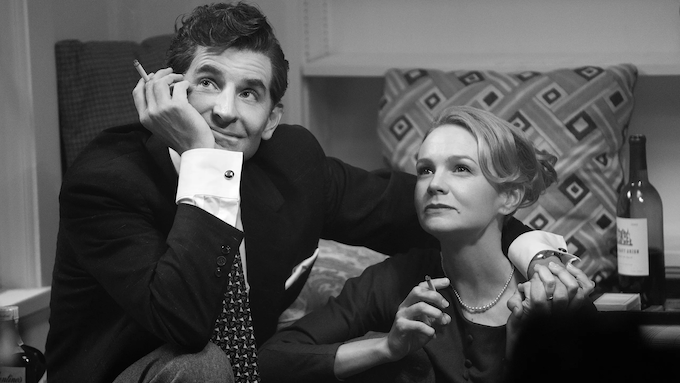
Another version of Bernstein’s story would hit all the signature biopic beats. It would show his tutelage at Harvard, his rise to fame, his brilliant contribution to movie musicals with the groundbreaking compositions in West Side Story, and even his death. But Maestro is interested in none of that. Despite taking place over decades, it preserves a rather myopic, Sorkin-esque view of the composer’s life.
It’s easy to have wanted more from a film depicting Bernstein’s story. But is that because we’re simply used to a specific formula? Perhaps it would have been nice to get some elucidation of a genius’ creative process. We don’t truly see how Bernstein creates or why he’s considered brilliant, but we do see what makes him tick. In a way, we may understand him more as a person, much in the way our family best understands who we are simply because they aren’t seeing us how the public sees us. And at least Cooper shows his cards right away, never once misleading us that this will be a traditional biographical drama.
On the other hand, Cooper and his co-writer Josh Singer do give us plenty of rumination on creativity and art. Although, a lot of the themes are thrown at us intermittently via diatribes or rants from the characters rather than massaged into the DNA of the story. It helps that the performances are capable of conveying much more than what’s written on the page.
Mulligan’s ability to be a completely different character than who she was in Promising Young Woman just showcases her range. Felicia may not be the protagonist, but Maestro is mostly about her.
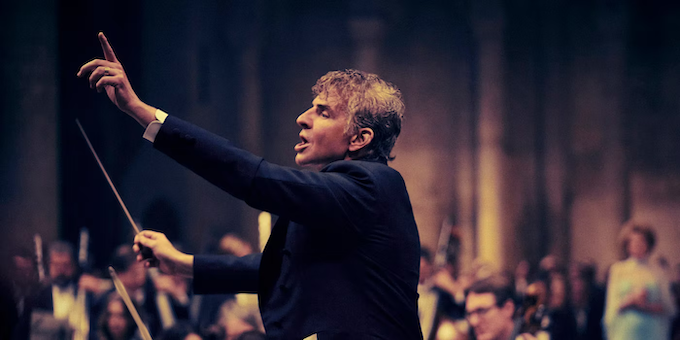
The climax of Maestro is about as poetic as you can get. Felicia sacrificed, erroneously, so Leonard could live, while Leonard could only make sacrifices as Felicia was dying. Unfortunately, this was all soon followed by an unfortunate scene of bathos that essentially closes out the film and puts a blemish on a rather beautiful ending.
Despite directorial ebbs, flows, and discordances, Cooper has the role of Leonard in the palm of his hand. This performance is far more than just prosthetics and a nasally accent. He possesses the character’s mind and memory, from his inclinations to his foresight to his lamentations. He seems to be in tune with Bernstein’s — or at least this version of Bernstein — deepest regrets and fears. That part of our soul that we have to dig deep inside when called upon to make sacrifices for someone we truly love. We may not be able to recall our biggest flaws on the fly, but when our soul mate is on her last leg of life, we become aware of how much of ourselves we owe to that person, and what we wish we hadn’t done in life. Yet for some people, like Felicia, making those sacrifices is far easier.


 The Twizard
Leave a comment