


“Anemoia” is the word you can use if you feel nostalgic for a time and/or place that you’ve never known. Surely, this is a common affliction. It’s why we often watch classic cinema of the ‘30s, ‘40s, ‘50s, and beyond (depending on your age), escaping into a reality we could never truly know. If these bygone eras are recreated in modern film, they still look, at least a little, like they were constructed today through a telescope. After all, a lot has improved for the better when it comes to sound and image quality. However, watching something that was actually made in the past brings an authentic experience that even the most faithful recreation can’t mimic.
Released in 1945, Rome, Open City was not just the first truly important film in Italian neorealism (and one of the most important Italian movies ever) but showed to outsiders what Italians, or anyone else oppressed by the Nazi regime, were going through at the time (the film is set just a year or two earlier). Yet, for those who actually experienced hardships during those times, the film provided catharsis.
It’s set during the nine months of Nazi occupation in Rome and follows a group of Resistance fighters trying to escape arrest. The “why” and the “how” get a little muddled in the crude and rigid storytelling but an inspired last half transcends mere pathos to become literal heartbreak as we watch hope and despair wrestle each other to the ground. In the world of the film, there’s no clear winner, but upon the film’s release, which came just weeks after the War ended, it would seem like hope had triumphed.

Unlike other films of the era that we romanticize about, like Casablanca or Notorious, where the War is the contextual stage for the plots, Roberto Rossellini’s seminal picture was direct, candid, dour, and actually depressing. Cinema was no longer a means for escape or a mere outlet for thought, but it was an act of agency, if not empathy. Rome, Open City wasn’t intended to transport, say, American viewers in 1945 to an exotic location but was a presentation directed at those fortunate enough not to fear for their lives on a daily basis for simply living and trying to be free. In close proximity to the time and place in which it was set, the film’s context is palpable and is capable of inciting anger even with modern audiences.
On the other hand, it distinguishes itself from Russian propaganda pieces from the 1920s, such as Battleship Potemkin, by maintaining subjectivity with its narrative. As an audience, we’re not being preached to but asked, on some level, to interpret the work of art before us.
At times dry and difficult to follow, Rome, Open City will still surprise you with its stunning performances which put this in the top tier of all ‘40s cinema in that regard. Aldo Fabrizi is remarkable as the priest, Don Pietro Pellegrini, the emotional conduit for the audience. The character is written with complexity through his words and actions but Fabrizi brings the depth to new layers with his authentic delivery and thoughtful emoting. You actually believe that he lived this experience.
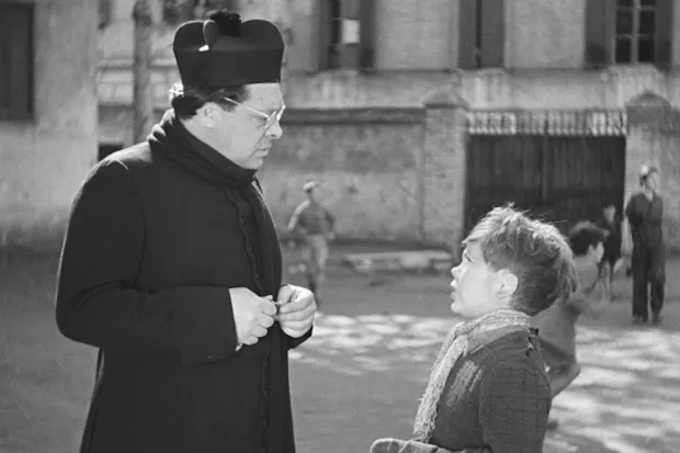
The entire cast is great, including Anna Magnani as the fallen housewife, or Harry Feist as the villainous Nazi commander, or Maria Michi as the quisling prostitute who makes the choice to betray her country and her lover in order to satiate her own addictions. She thinks she’s beaten the system — found a way to have her cake and eat it too, amidst a society that’s been forced to give up so much. It’s often difficult to judge acting in another language, but the best examples will still always shine through.
If you inspire enough hate, you will make the enemy strong enough to defeat you. In the movie, the Italians don’t win. The ending is disparaging. But Rome, Open City is one of the few examples where actual history can be imparted upon a work of fiction, complementing it from an artistic perspective. The Italians walk away hanging their heads low at the end, watching their community’s leader making the ultimate sacrifice, but little do they know that victory and freedom are awaiting them on the other side of the horizon.



 The Twizard
Leave a comment