
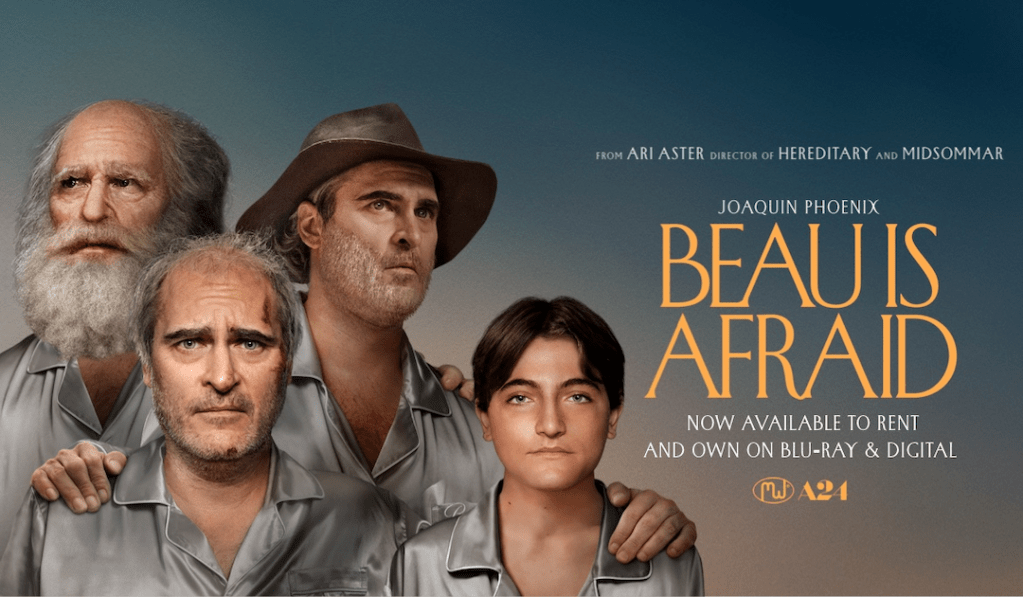
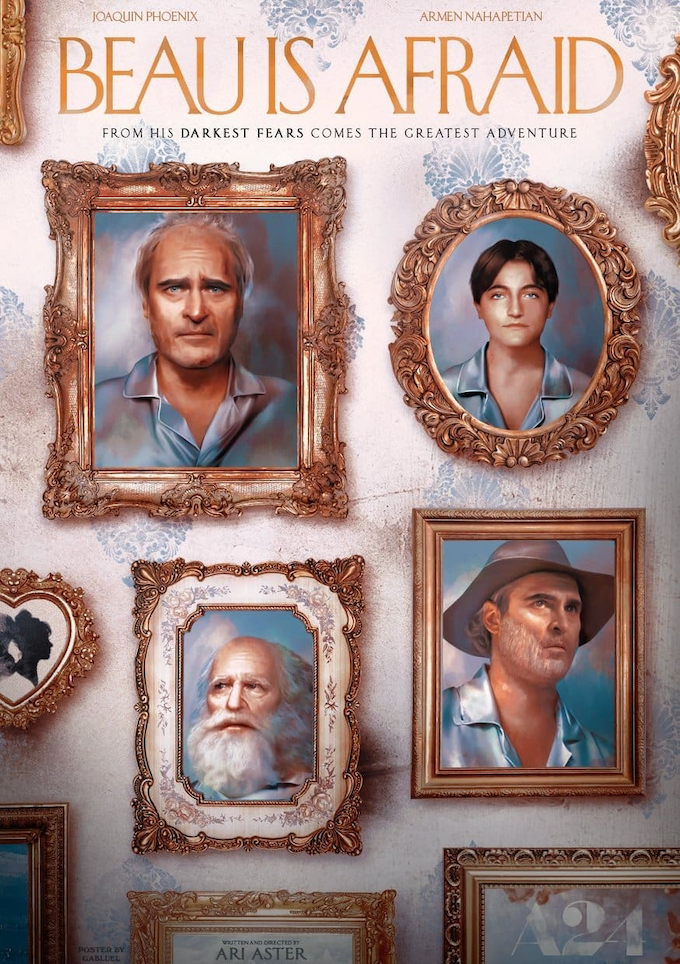
While watching Beau Is Afraid, I couldn’t help but think of Pauline Kael’s review of Bonnie and Clyde, of all movies. In her analytical essay, she postulates, owing to the deceptive nature of the seminal 1967 film’s comedic pretense, “Instead of the movie spoof, which tells the audience that it doesn’t need to feel or care, that it’s all just in fun, that ‘we were only kidding,’ Bonnie and Clyde disrupts us with ‘And you thought we were only kidding.’”
In Beau Is Afraid, comedy opens up to serve as satire, as the titular worrywart (Joaquin Phoenix) complacently accepts his rundown apartment building in the middle of a dystopian neighborhood that’s akin to Escape from New York. But then, as the protagonist journeys farther out into the “real world,” reality — at least as we know it — never takes a normal shape. It turns out the world of his apartment wasn’t isolated in a nihilistic snow globe, played up for comedic effect. This heightened plane is retained for the rest of the film until we’re only left to question if what we saw actually happened or if it were in Beau’s head all along.
As surface details become revealed to help us understand the bigger picture on an allegorical level, the plot’s literal elements become even more obfuscated. This illustrates the two distinct layers of the film. On one hand, there’s the grandiose conspiracy that Beau’s mother seems to have orchestrated it all from the start. And then, on the other hand, there are abstract events, playing like metaphorical symbolism, which may or may not have actually occurred. But if the grandiose conspiracy was all in Beau’s head, then why is so much time and effort of the film dedicated towards revealing it to us? And why doesn’t it connect to the abstract surrealism in a better way?

Beau Is Afraid is a darkly intriguing cinematic experience that gets fumbled upon its final act. Ari Aster’s long-awaited follow-up to the zeitgeisty Midsommar delivers most of the way through. The filmmaker suspends us in a state of weirdness and anti-realism, keeping us wound with tension before slowly bringing us out of it through rationalizations rooted in reality — or so we thought.
The overly-prolix maternal themes cock-block the audience from any payoffs that they desire of the Odyssean plot beforehand. Serving the grand idea rather than completing the mosaic, the reveals are big but never elucidate anything meaningful within the plot. We’re anticipating some moment of Truman Show-like clarity that satiates our lust for conspiracy shock.
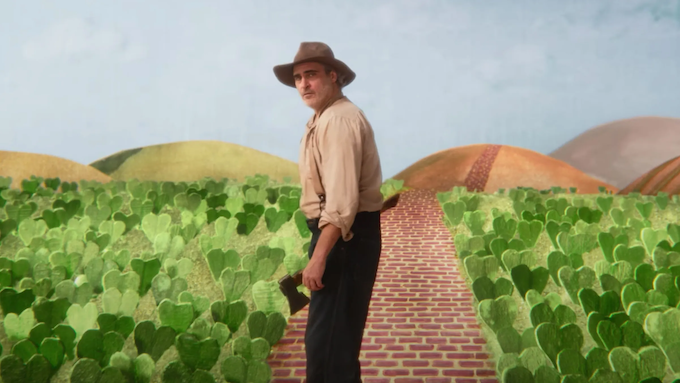
A reality check never really comes but still there’s roundedness found in Beau, who’s almost normal in his mental illness, especially when looking at everyone around him. While we’re here to put him under the microscope, he’s the also most sane person around. And if this seems too strange to be true, then perhaps it’s all in his head after all.
The trajectory in Midsommar worked because we bought into Florence Pugh’s character as a likable protagonist. Her fall from grace confused us and threw us off balance. Likewise, Beau Is Afraid only works if we can support Beau as a character worthy of our sympathy. Do we like Beau? If so, do we want to see him come out unscathed? Or at least changed for the better? Unfortunately, the confusing ending isn’t foul simply because it’s confusing but because we have no idea what it means to our protagonist.
RoboCop meets John Landis with a touch of Forrest Gump, Beau Is Afraid is still a wholly unique experience. Aster is so adroit at cultivating tension and uneasiness, and bringing intoxication to grossness — creating movies you can’t stop thinking about for days — and this is no different. You almost forget that there are no overt horror tropes. Instead, the film views fear as more of an irrational response to images and events than a reaction to threats on your life. After all, there may be nothing worse than the horror of your relative reality getting capsized.


 The Twizard
Leave a comment