

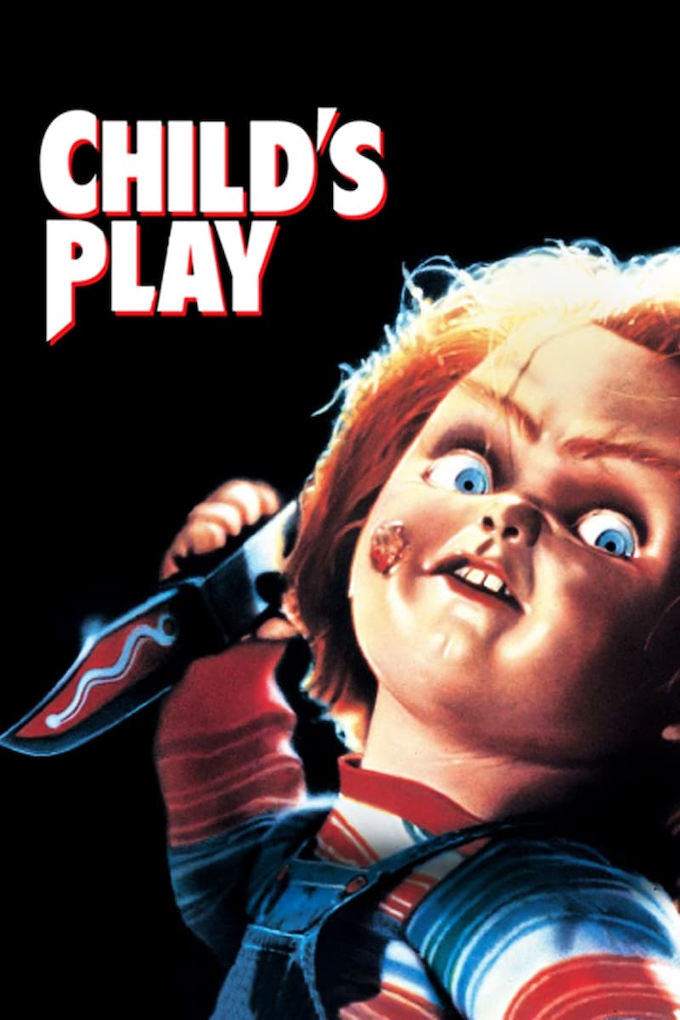
We don’t actually see Chucky come to life until about halfway through Child’s Play, a horror film that starts out as a cautionary tale about enabling the gluttony of merchandising but then quickly settles into its groove as a genre picture and stays there the entire time.
By 1988, we’d already seen four installments of the Halloween franchise, another four from Nightmare on Elm Street, and a whopping seven from Friday the 13th. The slasher genre didn’t need another monster, let alone another fly-by-night candidate for late-night TV programming. However, Dan Mancini had some other ideas in mind.
Focusing on the film itself rather than its audience, the creator and co-writer (with John Lafia and director Tom Holland) decided to throw his own hat into the ring. Rather than centering his story on attractive and horny teenagers, he opts to follow two people on either side of the target demographic: a middle-aged mother (Catherine Hendricks) and her 6-year-old son (Alex Vincent). In fact, there’s not a teenager in sight. There are no sex scenes at all, and when Hendricks and the detective, played by Chris Sarandon, have their spats, there’s not even any implied sexual tension between them. During a time when horror cinema was seemingly purchased outright by MTV, Child’s Play remains pure, if not autonomous, in its own way.
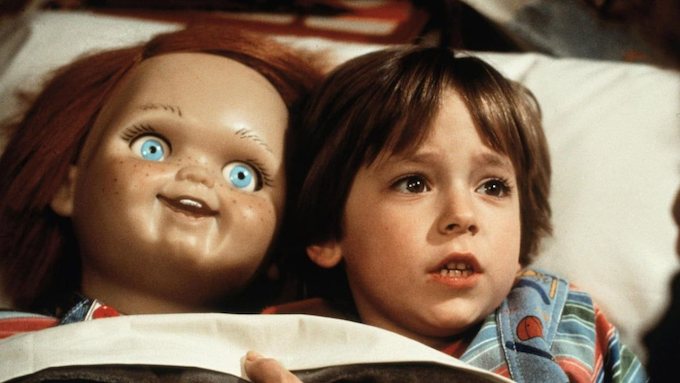
We all know the premise: A child’s doll, named Chucky, comes to life and goes on a killing spree. The cops obviously don’t believe the boy when he says his toy is the one doing all these terrible things. And so Chucky is able to knock off one or two victims in the meantime.
As a villain, Chucky is relentless, scrappy, and maniacal — he’s not your typical slasher who prowls slowly and keeps quiet when he needs to be. He has overt weaknesses and a more fitting mischievousness than your Freddy or Jason or Michael. He talks a lot, so we really get to hear his thought process as well. And when he fears his own mortality, he has a bit of an existential freakout.
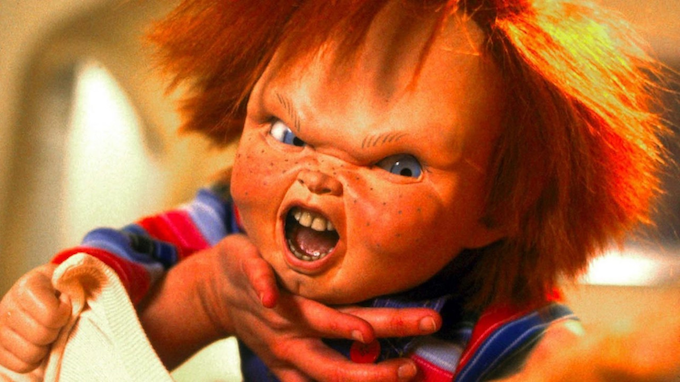
There are plenty of practical effects used in the film when violence is concerned, but the most impressive effect is the puppetry behind Chucky himself. And, aside from a brutal electrocution sequence, the most jaw-dropping bit of gore doesn’t come from any human character getting massacred, but from the slow, painful, and vicious execution of the villain.
Today, thanks to eight feature film installments in its own right and a successful TV series, Child’s Play has endured, and anyone not living under a rock knows the face of Chucky when they see it. Abiding by some already-proven slasher conventions, the movie hardly feels original today. But during a time when audiences were physically rolling their eyes at every new horror installment that would come out, this 1988 picture had people buzzing.


 The Twizard
Leave a comment