


New York in the 1970s may have single-handedly redefined the idea of a modern-day dystopia. With art imitating life, the smoky, crime-infested streets made their way onto our movie screens countless times to the point where cinema supplanted national news coverage to inform the public of a city they should never visit. Back then, many would have rather lived in an Orwellian reality than trek through the Bronx at night.
Fresh off his 1972 thriller The Mechanic, director Michael Winner reunites with Charles Bronson on Death Wish, a film that would reignite the actor’s career following a string of hits the decade before. He was in his 50s now and found unlikely popularity as a leading man at an age when most supporting actors might have seen their roles wane.
Celebrating its 50th anniversary this year, Death Wish doesn’t just take place amidst the grimy streets of New York but uses the city’s crime statistics as its primary context. Bronson plays Paul Kersey, a happily married, white-collar architect who finds himself at odds with his liberal social beliefs after his wife is murdered by home invaders.
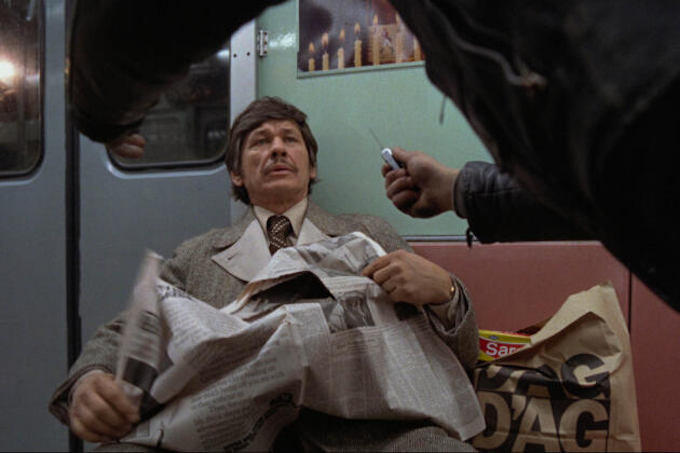
His job takes him to Tucson, Arizona, where a potential client takes him to a gun club. See, while handguns are illegal in New York, nearly everyone has them in Arizona — a state where crime is very low. Bronson points out that he is anti-gun because his father, a hunter, was killed after someone mistook him for a deer.
Up until this point, you would think the film was leaning towards the right, trying to convince the audience that these gun lovers might actually have a point. However, it brings enough depth to the characters that Bronson is not just a mindless liberal who merely doesn’t understand the other side. His own life experiences have dictated his sociopolitical beliefs. In fact, that’s how it is with most people on any side of the argument.
When characters discuss the severity of New York’s crime, we believe it. We hear about the city’s 900-odd muggings per week. Kersey says that many people can’t afford to leave, but his coworker argues that those in financial turmoil are usually the ones committing the crimes. It’s a gross overstatement but there’s some truth to his sentiments. The discrepancy between the lower and middle classes is so wide that to the former, the latter appears like they’re rich.
Death Wish deals in gray areas almost exclusively. Bronson is a card-carrying liberal tempted by guns and violence. He was once a conscientious objector in the Korean War but now commits to life as New York’s infamous vigilante, compelling others to do the same. His activity scares the police, who are afraid others might try to do the same, leading to unintentional killings of “anyone who simply looks too greasy.” Meanwhile, muggings in the city are cut in half because of his presence.
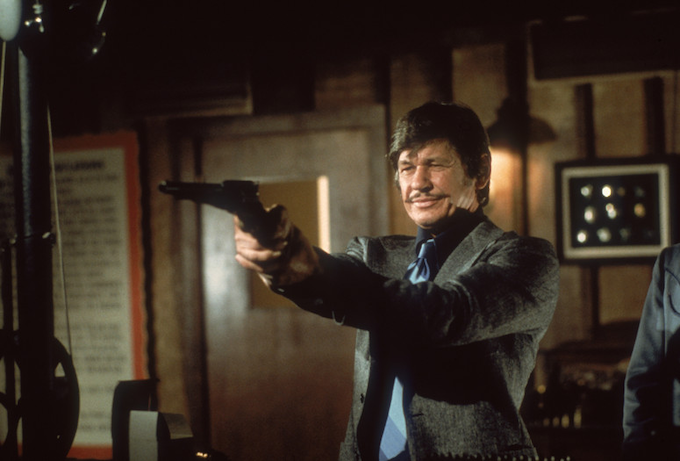
There’s no real right or wrong answer here. Perhaps Winner — working with a screenplay by Wendell Mayes, based on a novel from Brian Garfield — aims to convey the dangers of going extreme in one way or the other. You could argue that it’s Kersey’s extreme liberal beliefs that cause him to overcorrect to the other side, to the point that he becomes a murderer himself.
In fact, it’s compromise that actually makes our society work. Finding a middle ground is what allows us to get things done, whether it’s real estate deals or police work. Perhaps the ending of the movie fails to bring this message to light but it comes across if you really pay attention. Several times the idea of “being civilized” is mentioned, almost in admonishment. The criminals that killed Kersey’s wife were not civilized, but neither is Kersey now. Yet, you can clearly see the difference between the two. Kersey’s rampage never brings forth his wife’s killers but yet he’s able to get away with his own crimes because of a bargain he makes with the police. While the police can’t seem to find the men who killed his wife, we see them come out in full force to find The Vigilante.
Borrowing the calm, cool demeanor of his pal Steve McQueen in Bullitt, Bronson lends himself to the overall insouciant tone of the film. Few things make Kersey react, including the death of his wife. Meanwhile, Winner treats the material with an objectivity that suggests a pragmatism towards the violence in the film. The only time we’re really taken aback is when Kersey’s daughter is being molested and nearly raped. Every other act of violence is almost presented at face value. This is how it is — not how the media wants you to think it is.
Speaking of the media, Winner chooses to expand the world within his picture by continuously showing how the press and TV news are feeding off of the city’s transgressions, wielding crime statistics to take advantage of the public’s obsession with them. On the other hand, the media isn’t all bad. After all, it’s their fixated coverage on The Vigilante that scares New York’s muggers into passivity.
A think piece in the most unexpected way, Death Wish may have inspired countless revenge flicks over the decades — including the ones in this current John Wick era we’re living in — but it still feels like one-of-a-kind in a crowded sea of offerings. In fact, it’s kind of a masterpiece.


 The Twizard
Leave a comment