
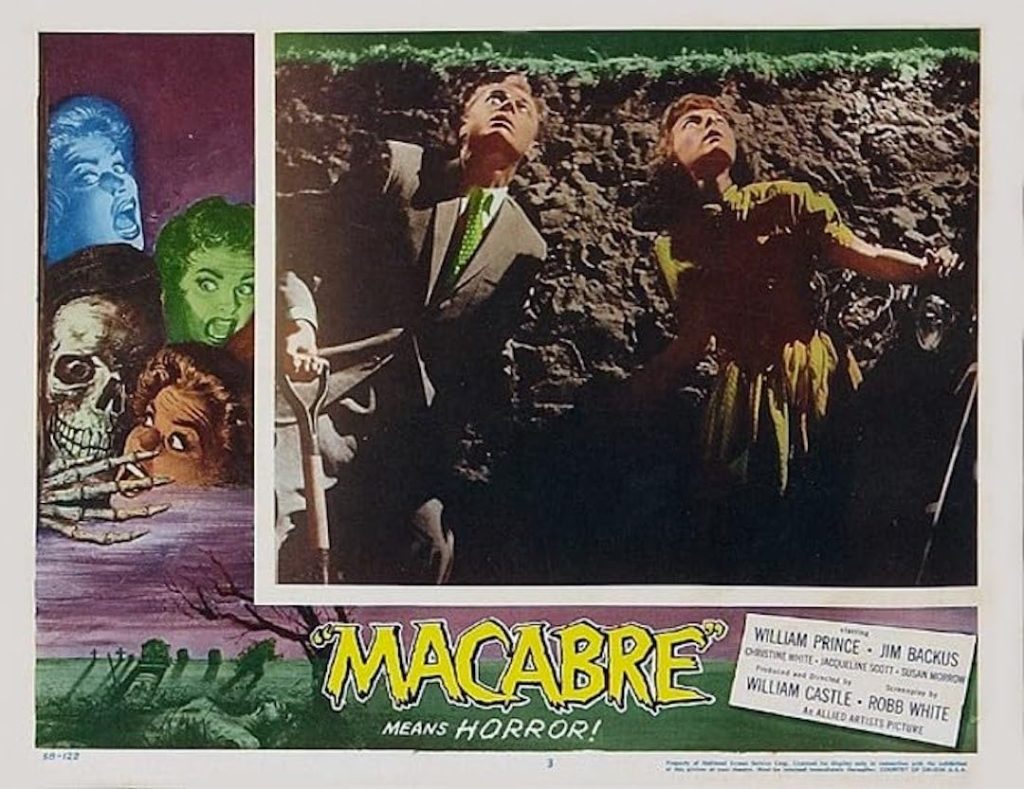
1958’s Macabre was far from William Castle’s first picture. However, it would be the first that came to define the eccentric filmmaker and how we know him today. From 1943 to 1956, Castle had already directed nearly 40 pictures. The two-year gap prior to Macabre was unprecedented for a man who churned out about three per year. However, forced to fund the project himself, even taking another mortgage out on his home (a trend that would reoccur throughout his career), Castle needed the extra time to get things in order.
For his first horror movie, he looked to the French film Les Diaboliques, aiming to set an ambiance for the audience and a perennial uneasiness throughout. Macabre centers on a small-town doctor, Rod Barrett (William Prince), who raises eyebrows after several of his family members have died under his care, including his own wife. We learn through flashbacks that the incidents are more complicated than just a bunch of dumb luck.
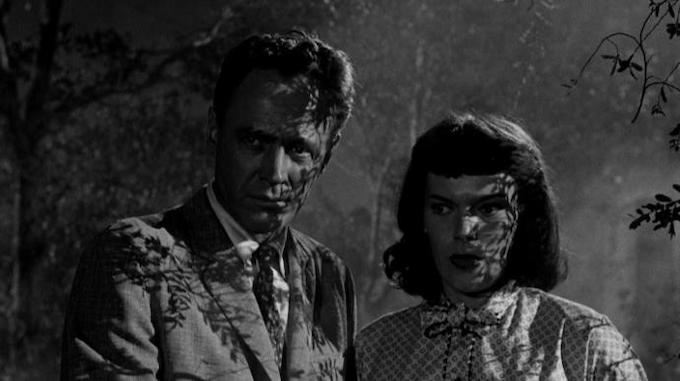
You can find Macabre’s influence in the likes of Hitchcock’s Psycho just two years later, in which the film’s characters are almost less important than the plot itself. In Psycho, the censors were just as stupefied as audiences when it came to Hitchcock’s treatment of his characters. For those who haven’t seen the 1960 masterpiece, its protagonist sleeps with a married man and steals her boss’ money. But about halfway through the film, she gets murdered by a psychopath. Were we rooting for her comeuppance? If so, then are we okay with her getting killed? And is the impulsive psychopath more evil than the completely sane woman committing premeditated crimes?
Viewers would have had similar thoughts about Castle’s cast in Macabre. You have two flawed individuals on opposite sides of the central conflict: a doctor who cheats on his wife and a rude policeman who constantly ridicules our protagonist for the string of deaths he’s experienced. These two men do not like one another. The policeman, excellently played by Jim Backus, is insufferable. We want to see him lose this battle with Dr. Barrett. And on the other hand, we want to see the doctor — our protagonist — find his daughter and save his reputation.
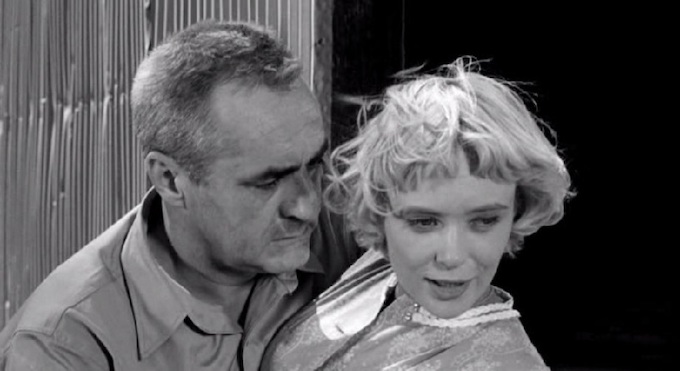
Macabre is one of the earliest examples of the viewer learning the value of perspective by hearing different sides of a story. The more the movie unfurls, the more our opinions change or evolve. Who’s the hero? Who’s the villain? The actual answer isn’t as interesting as the internal dilemma we have as both Rod and Jim are getting developed.
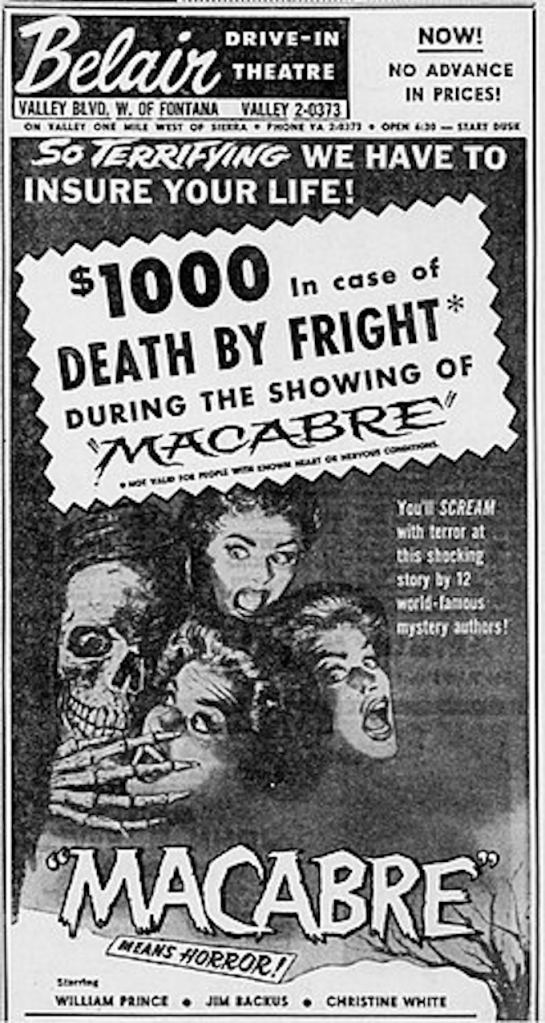
Macabre is the movie that begat the promotional stunts that made Castle a legend. For the 1958 picture, he handed out $1,000 life insurance vouchers just in case anyone died while watching it. He hired fake nurses to linger in theater lobbies to warn patrons prior to entering and had a Cowards Corner for anyone who left the movie early from being scared. Castle himself would show up at some showings doing various stunts, such as popping up out of coffins. The epilogue of the movie itself even issues an Agatha Christie-like warning against spoiling the ending for your friends who haven’t seen it.
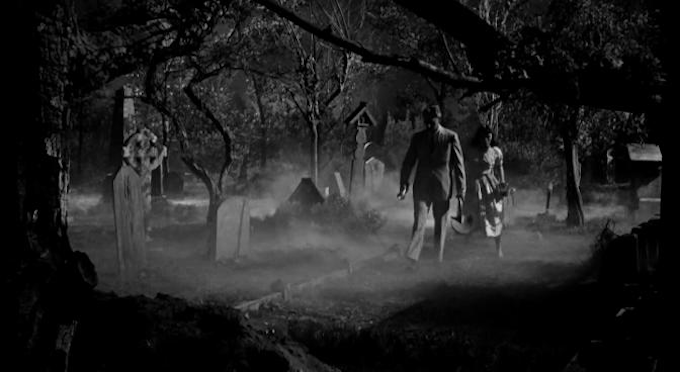
Regardless of any extracurriculars, Castle makes sure the film can stand on its own, first and foremost. He sets the tone with flickering lights, a relentless score by Corman-regular Les Baxter, ticking clocks, empty coffins, and a plethora of graveyard scenes including a midnight funeral ceremony. Even if you’re confused by the story of Macabre — delivered almost in code at times — or groaning at the various plot twists, you can enjoy the film simply for its atmosphere alone. It’s highly enjoyable both on the surface and upon digging deeper.
There are far worse ways to spend 72 minutes this Halloween season, and Macabre is one of the best.
Twizard Rating: 97
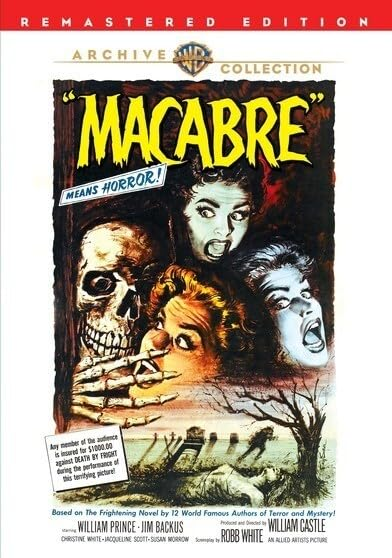
Home Video Options
If you want to own The House on Sorority Row, there are a couple of options:


 The Twizard
Leave a comment