


By 1995, the slasher was all but dead. It’s the reason why, just one year later, Scream revitalized the genre with its self-referential parody and human-focused premise. ‘80s slashers balanced an ensemble cast with a marquee villain, while Scream wisely chose a singular protagonist around which to surround its story. We no longer had to guess who the final girl was; she was our heroine from the beginning.
Halloween 6: The Curse of Michael Myers was released in ’95, to audiences who had seen enough blood and guts on screen that they were moving on to more conceptually-involved horror like The Silence of the Lambs or Cronos. These types of films, which featured very few kills if any at all, were much darker than simple knives to the throat; after you see stabbings happen ten times per movie throughout the ‘80s, they do lose their headiness.
Halloween 6 isn’t short on kills — one would argue it has the perfect amount — but it is heavy on ambiance. Set on Halloween night in the present day, the film gets by on autumnal trappings better than any in the series, dating as far back as the 1978 original. We see trick-or-treaters, decorated houses, and even costume parties. And this extends to the premise too, which surrounds the return of Michael Myers (again, of course) to his hometown of Haddonfield, where the holiday has been all but banned for years now. For all intents and purposes, this is the most Halloween-themed Halloween installment aside from the one-off Halloween III: Season of the Witch.
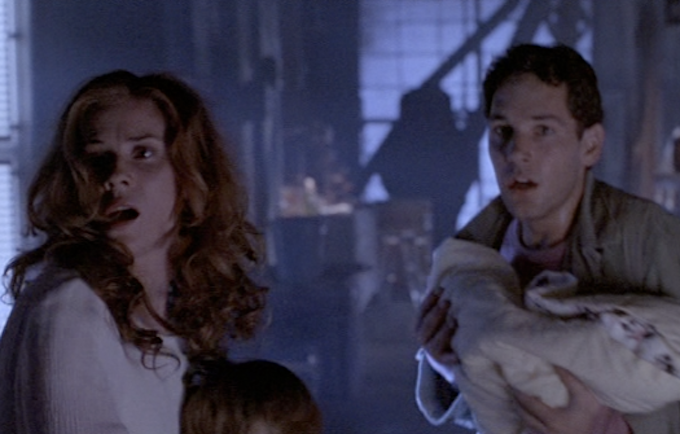
Fresh off of Clueless a few months prior, Paul Rudd stars as the adult version of Tommy Doyle, the boy being babysat by Jamie Lee Curtis’ character in the first movie. He lives in the same house, which is across the street from the abode where Myers killed his sister almost two decades ago. He’s become obsessed with finding Michael and stopping his next attack.
Operating with the same innate charm that he has still today, Rudd is effortlessly great here. He’s already displaying the on-screen magnetism that’s made filmgoers fall in love with him for nearly 30 years now.
Tommy befriends Kara (Marianne Hagan), the young woman currently living across the street, and her young son Danny who’s exhibiting the same strangeness that Michael once had as a boy. During the film, we dive into the background of Myers and the literal curse that turned him evil at such a young age. Finally, this series has the same type of lore that could be found in a Jason or Freddy movie, along with the sinister tone that should have been able to separate this franchise from its contemporaries years ago.
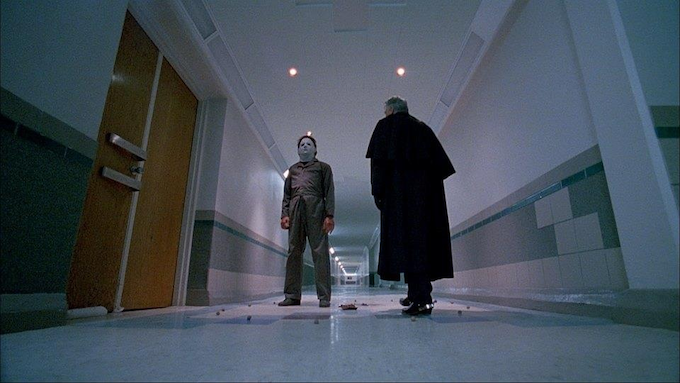
Aside from the blueprint-laying first film and the incomparable Halloween III, the franchise has never really been able to manage its content like the other two “Big Three” of the slasher world. Halloween II is gratuitous and sloppy, and Halloween 4 and 5 are overzealous with a misplaced sense of self. However, Halloween 6 has the proper gravitas the series has been wanting since the first film — before the tongue-in-cheek of Friday the 13th and Nightmare on Elm Street changed the genre entirely.
As it turns out, Michael Myers belongs in the ‘90s, flourishing here with its gothic tone and quasi-expressionist set pieces and camera work. Credit to director Joe Chappelle for nailing the tone the series should have had all along. Halloween 6 is much darker than any slasher that came before it. The kills aren’t thrilling; they’re terrifying. And the narrative moves with a type of fluidity that’s surprisingly rare among slashers of any era.
Fortunately, the genre was revived yet again the following year with the massive success of Scream, and the industry was better for it. However, it would have been interesting to see if anything would have changed had The Curse of Michael Myers got its proper due from the very beginning. Or perhaps it’s better as the unsung hero.



 The Twizard
Leave a reply to The House on Sorority Row (1983) Is a Boilerplate Slasher with Splashes of Originality – The Twizard Cancel reply