
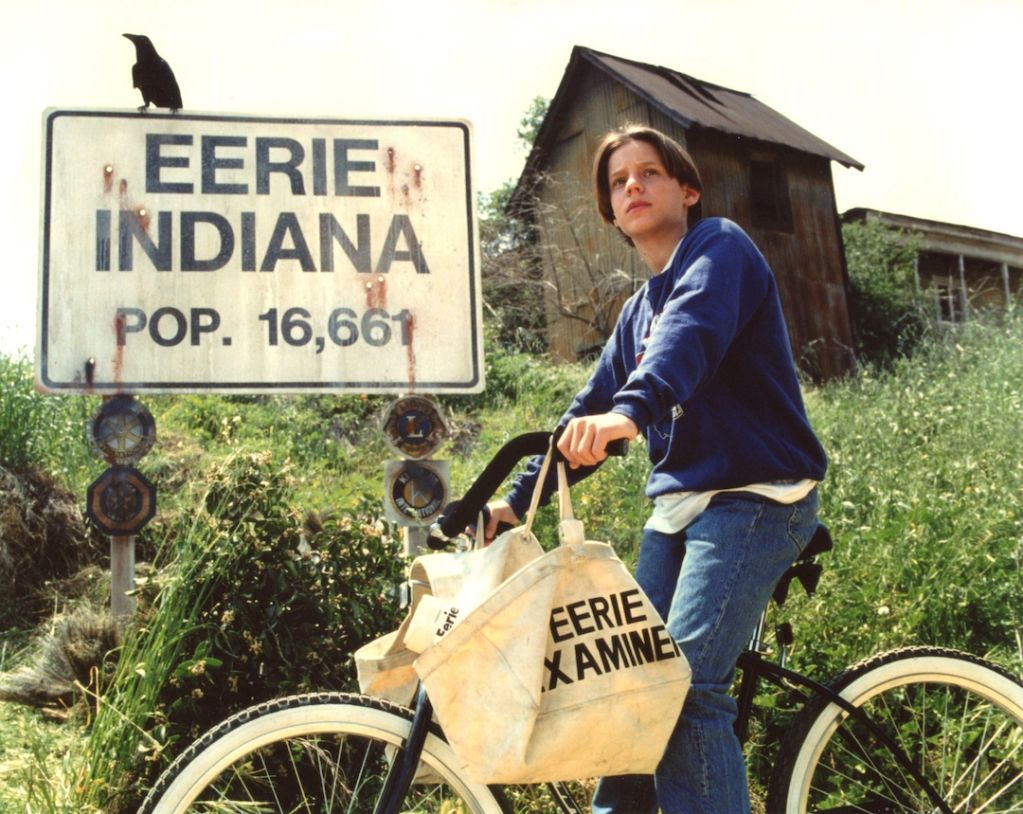
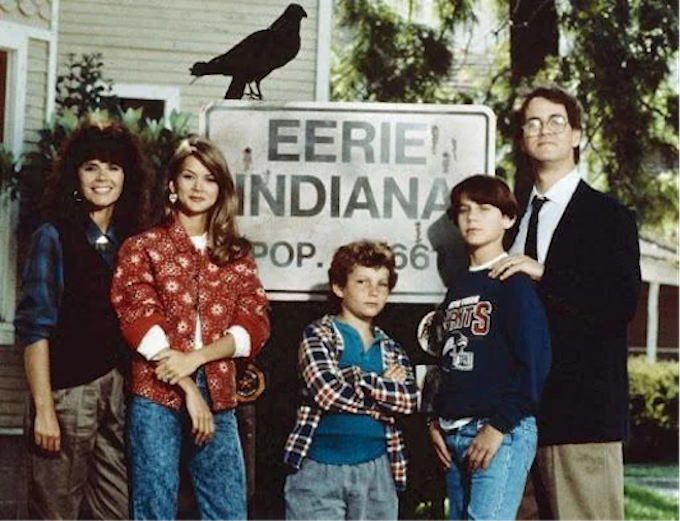
For those of you who grew up with the ’90s horror/sci-fi TV show Eerie, Indiana, consider yourselves lucky. Revolving around a big city kid, Marshall Teller (Omri Katz), who moved with his family to the titular small town, the series originally aired in 1991 on NBC and lasted just 18 episodes before being canceled (a 19th episode aired over a year later). From there, like most One-Season Wonders, the show got syndicated on a variety of kids networks such as the Disney Channel (when you still had to pay a premium for it) and, notably, Fox Kids. The popularity earned from the latter was so significant that it catalyzed a sequel/spin-off series called Eerie, Indiana: The Other Dimension (not as good).
As a quasi-anthology series, Eerie, Indiana followed the same protagonist throughout its run but told a new story each episode, sometimes loosely connecting a thread from a previous tale. A paragon of what a kids’ horror show should be, the series ranged from the playfully frightening to the strangely intoxicating. Compared to Nickelodeon’s Are You Afraid of the Dark? — the only other in its genre that could consistently hit an effective note — Eerie leaned on the odd and inexplicable more than it did the tortuous and terrifying.
The acting is great, the tone is almost always a perfect balance between dark comedy and truly peculiar, and the storytelling is about as consistently fluid as you’ll find in children’s television, featuring some very inventive plots.
Over 30 years later, Eerie, Indiana is still riding the cult wave. Immensely popular amongst those who’ve preserved it inside a drawer in their nostalgia filing cabinet but largely “forgotten about” by the masses, the series seems to be destined for discovery or rediscovery. Its fate and future have remained a mystery, ending on a bit of a cliffhanger with its final episode, only adding to a lore that’s already, well, eerie.
I’ve taken the time to rewatch Eerie, Indiana and have ranked every episode:
- 19. The Retainer (Episode 2)
- 18. Tornado Days (Episode 12)
- 17. Mr. Chaney (Episode 14)
- 16. Zombies in P.J.s (Episode 17)
- 15. Marshall’s Theory of Believability (Episode 11)
- 14. The Dead Letter (Episode 8)
- 13. The Hole in the Head Gang (Episode 13)
- 12. The Broken Record (Episode 19)
- 11. Just Say No To Fun (Episode 6)
- 10. The Losers (Episode 4)
- 9. America’s Scariest Home Video (Episode 5)
- 8. No Brain, No Pain (Episode 15)
- 7. Who’s Who (Episode 9)
- 6. Forever Ware (Episode 1)
- 5. Heart on a Chain (Episode 7)
- 4. The Loyal Order of Corn (Episode 16)
- 3. Reality Takes a Holiday (Episode 18)
- 2. The ATM with a Heart of Gold (Episode 3)
- 1. The Lost Hour (Episode 10)
19. The Retainer (Episode 2)

“The Retainer” is an interesting pick for the 2nd episode of the series. It’s slow and relatively uninteresting compared to the other storylines. Like the rest of the show, it features a fairly good concept, but after the chilling precedent set by the pilot, this one seems a bit mild. Marshall refuses to go to the orthodontist after his classmate’s retainer allows him to hear what dogs are saying. You’d think this would be a good thing, but Marshall and his friends become privy to the neighborhood dogs’ plans of an uprising. Any fear evoked by dogs never translates well in fiction, and this is no different. Never underestimate the effectiveness of having a human villain. But also, the direction in which this story ends up taking us isn’t terribly interesting either. The “No Barking” sign inside the dog pound made me chuckle. Otherwise, “The Retainer” is really the only subpar episode of the series.
18. Tornado Days (Episode 12)

The town of Eerie is hosting its annual Tornado Day picnic to appease a tornado named “Old Bob,” which inexplicably approaches the town every year on that very day. This year, however, Marshall refuses to go to the picnic out of fear that this will be the year Old Bob will actually strike. This angers the tornado, and so it decides to finally make a visit. Tornado hunter/meteorologist, Howard Raymer, falls out of the sky and onto Marshall’s front lawn, teaching him and Simon how to talk to tornados. They discover that Old Bob wants Marshall and Howard both dead. The hokey special effects aren’t what make this episode fall so low on this list, but it’s the convoluted premise that does. However, we do feel some legitimate suspense when it comes to Marshall’s fate and the tornado.
17. Mr. Chaney (Episode 14)

There’s a tradition in Eerie that every 13 years a Harvest King is crowned and must go into the forest until he catches a glimpse of the Eerie wolf. The only problem is that every one of the previous Harvest Kings has mysteriously disappeared. Admittedly intriguing and memorable, this episode is still riddled with plot holes despite some interesting sociopolitical commentary sprinkled in.
16. Zombies in P.J.s (Episode 17)
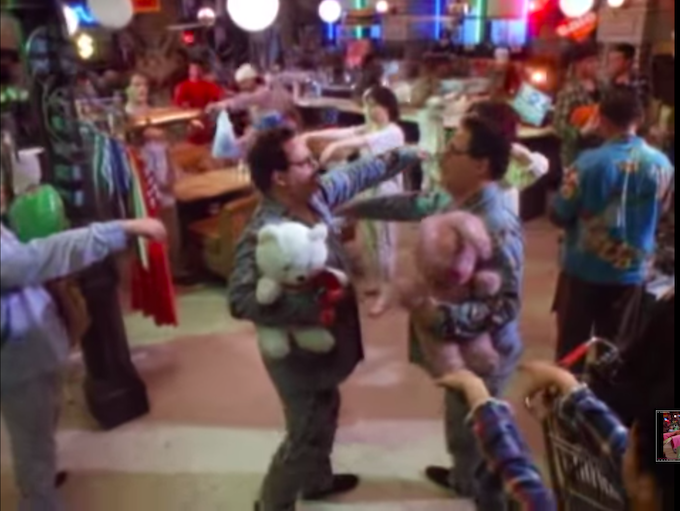
Most Eerie, Indiana episodes have some sort of allegorical theme, but “Zombies in P.J.s” is almost exclusively a metaphor. Radford, the owner of the World O’ Stuff store in town is facing bankruptcy due to a possible audit from the IRS, so a mysterious businessman known as The Donald makes him an offer to get him out of his situation. It turns out he only wants to brainwash the entire town through subliminal advertising so that they buy everything in the store on credit. The story doesn’t hook us quickly enough, and even when we realize what’s happening, we remain slightly underwhelmed. This is certainly a tale that’s been told before in other shows and movies, even though we get a pretty good twist at the end of this version.
15. Marshall’s Theory of Believability (Episode 11)

Acclaimed paranormal expert, Nigel Zirchron, visits Eerie to observe an extraterrestrial object he believes is due to land there any day. Marshall and Simon, who are huge fans of Zirchron, are thrilled, even though the rest of the town thinks he’s a hack. The story here is slightly messy and another one that takes a while to arrive at its hook. However, it’s fun seeing Marshall’s family get in on the fun and mesh into Marshall’s world for once—even if it’s only briefly. This is definitely a different style of episode for the show, showing a unique angle of the universe built within.
14. The Dead Letter (Episode 8)

How come old ladies in TV shows are never the ones to question supernatural phenomena? In “The Dead Letter”, a ghost named Trip appears to Marshall after our protagonist opens an old letter from the 1920s. The plot is deliberately elongated as Marshall inexplicably refuses to deliver the letter for Trip. Although it plays host to a pretty standard type of lost love story, the episode executes the familiar trope with the show’s unique brand of charm.
13. The Hole in the Head Gang (Episode 13)

“The Hole in the Head Gang” serves as a really unique take on a ghost story while expanding on the world within the show really well. Marshall and Simon stumble upon an old mill that’s rumored to be haunted. In reality, it’s a hoax set up by a teenager with a raspy voice and gray hair (played by James Marsden). However, they accidentally awaken the actual ghost of a bank robber when they find his rusty old gun. Now, the spirit wants Marshall to help him rob the bank he was never able to rob. Putting its own spin on a classic ghost tale, the episode is enticing, even if it loses a bit of steam towards the end.
12. The Broken Record (Episode 19)

Marshall’s shy friend Todd discovers the heavy metal band Pit Bull Surfers and starts rebelling against his abusive father. While the story means well and has some really good things to say about the influence and role of music on our adolescence and identity, it tries hard to balance that sentiment with the show’s trademark weirdness, never quite fully realizing the latter.
11. Just Say No To Fun (Episode 6)

When Marshall’s classmates go in to get take their mandatory eye exams, they get hypnotized by the new school nurse to become boring, studious zombies—including Simon. Part They Live, part A Clockwork Orange, this episode handles its juvenile wackiness with surprising maturity. Even if the story never gets as dark or dire as it strives to be.
10. The Losers (Episode 4)

Marshall goes down a rabbit hole of discovery after his dad’s lucky briefcase goes missing. He finds a secret underground world of missing things, run by folks who think that forcing people to replace their lost items helps the economy. The episode’s core logic is somewhat flawed and the script may show its cards too early, but we get a visually stunning set piece to go along with its equally inventive premise.
9. America’s Scariest Home Video (Episode 5)

Perhaps not the most essential episode for precipitating the Halloween ethos, but Eerie, Indiana has a lot to choose from otherwise. Marshall and Simon are babysitting Simon’s pest brother, Harley, on Halloween night when he accidentally switches places with the mummy in an old black-and-white movie. Harley becomes a monster on set as he wreaks havoc on the other actors in the film. Meanwhile, the mummy haunts Marshall and Simon back at home. The plot meanders a bit early on as it goes off on some tangential bit about submitting a video for America’s Funniest Home Videos, but once the Harley/Mummy switch happens, the episode becomes really enjoyable.
8. No Brain, No Pain (Episode 15)

“No Brain, No Pain” is about not judging people too quickly. Marshall and Simon help out a homeless man, who locals think is an axe murderer. He’s being hunted down by a mysterious woman with a laser gun. It turns out that the man may have some secrets that even he doesn’t know about (anymore). More than most in the series, this episode has very smart, well-written dialogue and some interesting twists to go along with its deceptive humor.
7. Who’s Who (Episode 9)

You can tell the showrunners really had a good time making “Who’s Who” (not that they ever don’t). Filled with witty humor and a creepy, unpredictable story, this episode is just as much fun to watch for the viewer. Marshall and Simon meet a girl, Sara Bob, who has a dysfunctional family filled with brothers who treat her like a slave. Marshall helps her discover her artistic ability, not realizing that the pencil he gave her to sign her name is magical, turning everything she draws into a reality. She begins abusing her powers for her own happiness, risking the happiness of others.
6. Forever Ware (Episode 1)

There’s something to be said about being the first episode. You present the series for the first time and set the tone and the bar for what’s to come. Here, the bar is set high, but not too high, while also exemplifying the show’s unique tone. Marshall’s mom is approached by their neighbor Betty Wilson to buy ForeverWare, which is basically just Tupperware but with magical properties that keep food fresh for decades. But then weird discoveries are made as Betty’s twin sons give Marshall a mysterious note begging him for help. The episode executes its high concept at every turn, all while juxtaposing the ’50s utopian idealism with the science fiction surrealism the series does so well. There are a couple of plot holes inherent to the premise, but we also get probably the creepiest and most terrifying villain of the series.
5. Heart on a Chain (Episode 7)

Things in Eerie, Indiana suddenly get real with this episode. Marshall and one-off character, Devon, are both falling for the new girl in class, Melanie (Danielle Harris). Melanie needs a heart transplant and her family moves to Eerie in hopes of finding a donor. The boys each vie for her affection by buying her gifts, carrying her books, and walking her home. It’s a friendly competition since Devon and Marshall are both really good friends. Marshall says Devon is one of the only people he can hang out with because he’s weird just like him. One day Devon gets killed in a gruesome accident and suddenly Melanie has found a donor for her heart. She begins reciprocating feelings for Marshall, but every time they get close, she has some sort of heart attack as though Devon’s jealousy has transcended from beyond the grave. It’s weird, and mature, and evidence that this show never desired to talk down to its young audience.
4. The Loyal Order of Corn (Episode 16)

“The answer to your questions is simpler than you think and stranger than you imagine.” For a series that thrives on its loosely episodic nature, Eerie, Indiana hints with “The Loyal Order of Corn” that perhaps it was going to connect more tissue if it had been renewed for a second season. Marshall and Simon attempt to infiltrate the local male lodge, the Order of Corn, of which Marshall’s dad is a new member. There are some Illuminati parallels and we finally get some quasi-answers to James Marsden’s unknown character of Dash X. Retaining the enigma of the series by not giving too much away, the episode is masterful in the way it builds its mystery and exemplifies the show’s way of crafting kinetic storylines. Compared to most other episodes, this one feels much bigger, as though it was intended to be a jumping-off point for future tales.
3. Reality Takes a Holiday (Episode 18)

Leave it to a TV show about oddity to come up with a perfectly self-referential story like this. Marshall finds a television script in his mailbox for a show called Eerie, Indiana. Upon walking back into his house, he realizes he’s behind the scenes of the show where his family and friends are actors. Amidst trying to figure out what’s going on, Marshall also has to put a stop to his “character” being murdered at the end of the episode. Taking into account the series’ cancellation, the actual showrunners of the actual Eerie, Indiana have found a way to turn their unfortunate situation into a really fun meta-fiction episode. It’s too bad we don’t end up getting to see what ultimately happens with Dash X, but at least he’s incorporated into this storyline as well.
2. The ATM with a Heart of Gold (Episode 3)
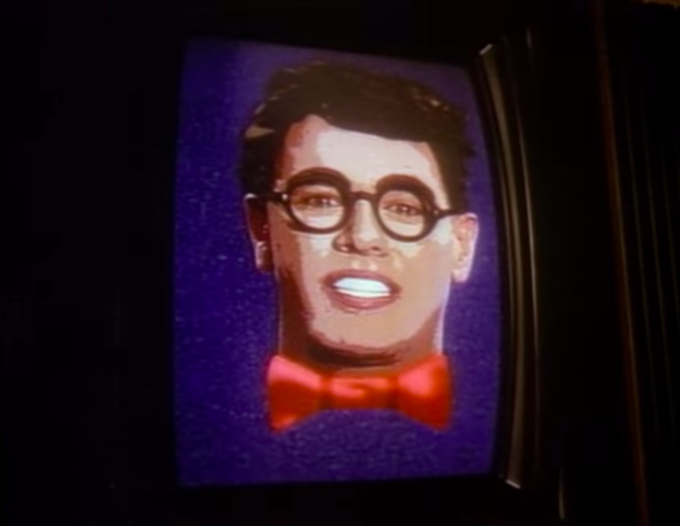
You don’t have to be an Eerie, Indiana fanatic for “The ATM with a Heart of Gold” to leave an indelible impression on you. Having perhaps the most iconic imagery in the series with the visage of its titular computer, the episode bears a simple premise: Simon befriends a humanoid ATM machine that starts giving him money for free. The rest of the plot follows a logical sequence of events, but while subtly developing Simon more as a character and using horror conventions to evoke more of a visceral response to the material. Mr. Wilson, the name given to the “friendly” artificial intelligence ATM, is a mere face with a robotic voice. His range of expressions is narrow, fluctuating between quick, almost worrisome side-eyed glances and disingenuous smiles. He’s neither monster nor hero — just a creepy computer desperate for human approval. Unlike other fables about the dangers of buying people’s friendship, this episode approaches the story from both sides of the transaction.
1. The Lost Hour (Episode 10)

It’s no surprise that this show is able to handle alternate dimensions and time travel with creativity and poignance. In “The Lost Hour,” Marshall refuses to abide by the state of Indiana’s non-conformity to setting the clocks back an hour in the fall, so he turns back his own watch one hour in protest. When he wakes up, he’s in a different realm with an old milkman as his guide. More than any other episode of the show, you can imagine this premise being turned into a movie. Adding some scope to the series with its implications, the Twilight Zonian premise sets the stage for a solid mystery, a great twist, and actual justification for its oddity. And even though it accomplishes all it sets out to, the concept is so great we wouldn’t mind if it were even longer. A great companion to “The Lost Hour” is “Time Tunnel” from The Adventures of Pete & Pete.
“The answer to your questions is simpler than you think and stranger than you imagine.”
Similar: Ranking Every Season of ‘Are You Afraid of the Dark?’



 The Twizard
Leave a comment